

My roommate saw his power bill last winter and sent me a photo of it at midnight.
Just the photo. No caption. I knew exactly what he meant.
HVAC is where most of the money goes. I already knew that. But when he asked me if a smart thermostat would actually help, I wanted to give him a real answer instead of repeating whatever Google says on the first result.
So I spent time going through the actual data. Energy usage studies, real user savings numbers, payback period math, all of it.
Here is what I found.
 What a Smart Thermostat Actually Does
Before we get to money, I want to explain what these things actually do. Because most people think it is just a fancy way to control your temperature from your phone.
That is part of it. But the real value is automation.
Most people do not manually adjust thermostats when leaving home or going to bed. The Department of Energy says adjusting your thermostat 7 to 10 degrees for 8 hours daily saves up to 10 percent on heating and cooling annually. Smart thermostats do this automatically, every single day, without you remembering.
That is the core pitch. Not that you get a cool screen. It is that the device does the thing you already know you should be doing but never actually do.
The Real Numbers on Energy Savings
I want to be upfront that the savings range you will see quoted varies a lot depending on the source.
Smart thermostats save 8 percent on average according to EPA ENERGY STAR verification, with savings ranging from 5 to 26 percent depending on previous thermostat habits, climate zone, and HVAC equipment efficiency.
That 8 percent floor is the conservative number. The real ceiling depends heavily on how bad your current setup is.
Nest data shows users save an average of 10 to 12 percent on heating and 15 percent on cooling with auto-schedule learning. That translates to roughly $131 to $145 per year for the typical American home.
So the honest answer is somewhere between $50 and $200 a year depending on where you live, how much you currently spend on HVAC, and whether you were doing anything smart with your old thermostat.
If you had a programmable thermostat that you never actually programmed, you are starting from a worse baseline. Your savings will be higher because you were wasting more to begin with.
The Payback Period Math
This is the question that actually matters. How long until the device pays for itself.
The Google Nest Thermostat is $130 and the Nest Learning Thermostat 4th Gen is $280.
At $130 for the standard Nest and $131 to $145 in annual savings, you break even in about 11 months.
Based on current national average utility rates, most homeowners recoup the initial investment within the first year.
At $280 for the Learning Thermostat, payback takes closer to 2 years at average savings rates. Still reasonable for a device that lasts 7 to 10 years.
Over a 10-year period, a thermostat saving $155 to $237 per year returns roughly $1,085 to $1,660 total, which is 15 to 24 times the purchase price.
Those numbers hold up. And that is before factoring in utility rebates.
Utility Rebates Are Real and Most People Miss Them
This is the part nobody talks about when making the buying decision.
Many US utilities offer $50 to $200 rebates on ENERGY STAR certified smart thermostats. AEP Ohio rebates $50, PECO offers $75, and Mass Save provides $100 off smart thermostats.
Before you buy, check your utility company's website for rebate programs. Some will knock $50 to $100 off the price immediately.
At $130 for a Nest Thermostat minus a $75 utility rebate, you are paying $55 out of pocket for a device that saves you $130 a year. That math is hard to argue with.
When It Actually Works vs When It Does Not
I want to be direct here because not every situation gets the full savings.
You will see savings closer to the low end if your home is already tight and well-insulated, your habits are already optimized, or your system is not fully compatible.
If you are already manually adjusting your thermostat every time you leave the house, running schedules consistently, and living in a well-insulated newer home, a smart thermostat adds less because there is less waste to cut.
The biggest savings go to people who leave the heat or AC running at full blast all day in an empty home. Which, based on my power bill history, is most of us.
Geofencing adds up to 23 percent extra savings on top of basic scheduling because it catches all the random times you leave unexpectedly.
Geofencing is the feature where your thermostat tracks your phone's location and switches to away mode the moment everyone leaves the house. No action required from you. It just happens.
That one feature alone is what separates the savings of a good smart thermostat from a basic one.
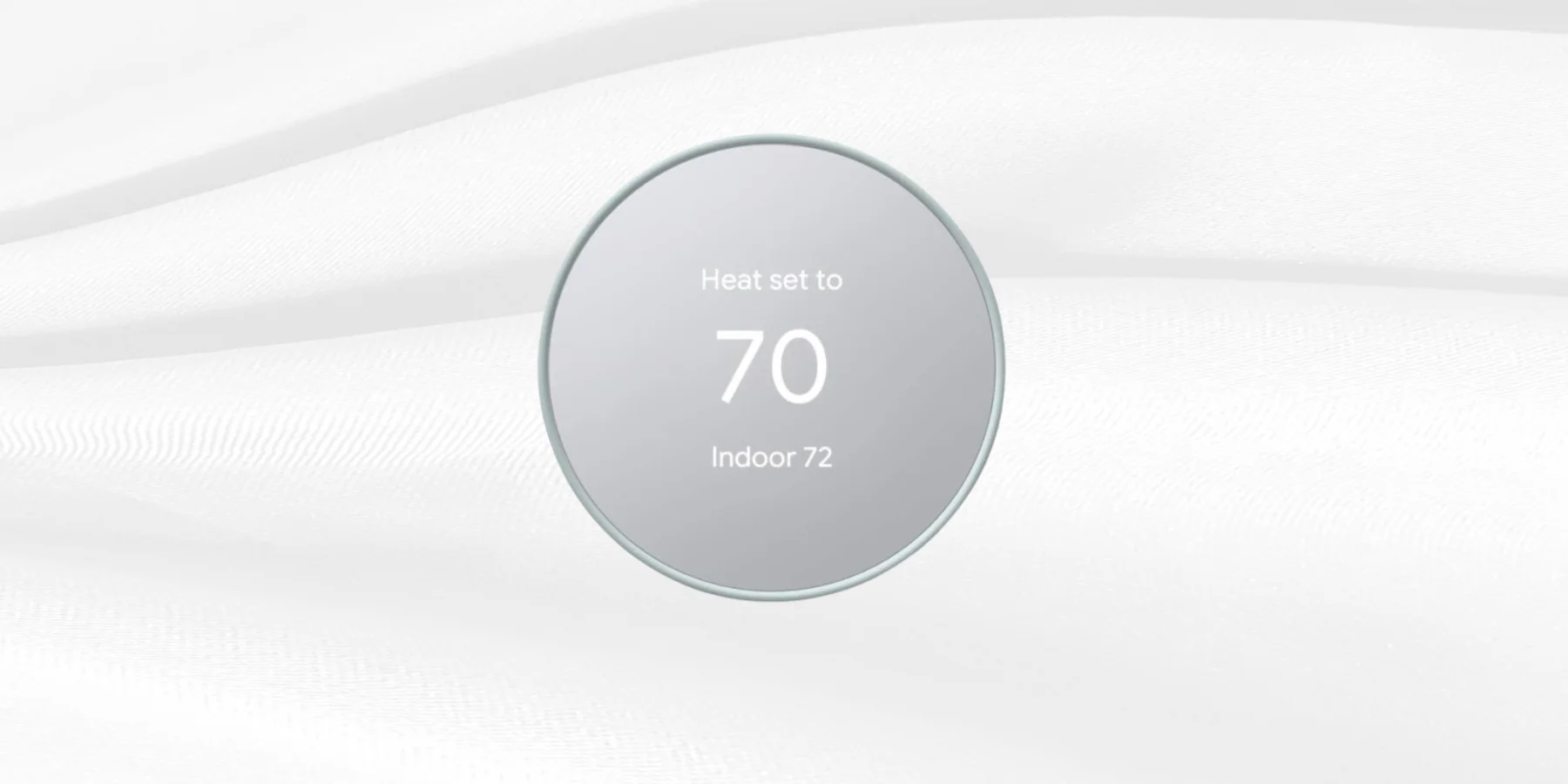
Which Google Nest Model Should You Actually Buy
There are two Nest thermostats and the difference matters before you spend anything.
The Nest Thermostat is $130 while the Nest Learning Thermostat 4th Gen is over twice as expensive at $280.
The standard Google Nest Thermostat at $130 gives you app control, scheduling, geofencing, energy reports, and works with Alexa, Google Home, and Apple HomeKit through Matter.
The Nest Learning Thermostat 4th Gen at $280 adds a Smart Schedule learning feature that observes your behavior and builds a schedule automatically, Dynamic Farsight radar that detects when you approach, and a bundled temperature sensor.
Here is the honest take on the learning feature. A lot of people find the learning feature develops a mind of its own and gets annoying in some households.
For most people the standard $130 Nest covers everything that matters. The learning feature is genuinely useful if you have a very irregular schedule. If your routine is consistent, you are paying $150 extra for something you could set up manually in 10 minutes.
Does It Work Without a Hub
Yes. Neither Nest thermostat requires a separate hub.
Both connect directly to your WiFi and run through the Google Home app. Nest is currently the only major thermostat brand that supports Matter, which means it works natively with Google Home, Alexa, and Apple HomeKit without any workarounds.
We covered how hub-free smart home setups work in detail in our smart home without a hub guide. A smart thermostat fits into that setup cleanly without adding any complexity.
What About Compatibility With Your HVAC System
This is the most important check before buying.
Most forced-air heating and cooling systems are compatible with Nest. Central AC, gas furnace, heat pump, multi-stage systems, most of them work.
What does not work is electric baseboard heating, radiant floor heating, or systems with a proprietary control board.
Google has a compatibility checker on their website. Enter your current thermostat's wire labels and it tells you in 30 seconds whether Nest works with your system. Do this before ordering anything.
The Nest Learning Thermostat has slightly broader HVAC compatibility than the standard model, so if your system is borderline, the Learning version might be worth checking.
How a Smart Thermostat Compares to Other Smart Home Upgrades
We covered a lot of devices across this blog series and I want to put the thermostat in context.
A robot vacuum under $300 from our best robot vacuums guide saves you time. A smart plug saves maybe $20 a year if you use the energy monitoring well. A smart thermostat saves $130 to $200 a year in actual dollars.
On pure financial return, the thermostat is the best investment in your smart home. Not the most exciting device. Not the one that gets the most reaction from guests. But the one that pays you back the most.
If you have not bought any smart home devices yet and you own your home, this is where I would start.
Who Should Skip It for Now
Renters who cannot replace their thermostat without landlord approval.
People in apartments where utilities are included in rent.
Anyone with electric baseboard or radiant floor heating who would need to verify compatibility first.
And anyone who is already running a well-optimized manual schedule and living in a well-insulated newer build. The savings will be real but small enough that it takes longer to justify.
Final Thoughts
The numbers are real.
A smart thermostat is not a gimmick. It is the rare smart home device where the financial math is obvious and the payback period is under a year for most homeowners.
The standard Google Nest Thermostat at $130 covers everything most people need. Check your utility company for rebates before buying. Run the compatibility checker before ordering. Install it yourself in 30 minutes.
Then forget about it and watch your next few power bills.
FAQs
How much does a smart thermostat actually save per year?
Between $50 and $190 for most people based on EPA data, with higher savings in colder climates or homes with poor current thermostat habits.
How long until a smart thermostat pays for itself?
At the standard Nest price of $130 and average savings of $130 per year, about 12 months. Less if you qualify for a utility rebate.
Does a smart thermostat work without WiFi?
It will still control your temperature manually from the device itself. But remote access, scheduling, and geofencing all require WiFi.
Do I need a Nest Hub or Google Home device to use a Nest Thermostat?
No. The thermostat runs independently through the Google Home app on your phone. You do not need any additional Google hardware.
What is geofencing and does it actually help?
Geofencing tracks your phone's location and switches your thermostat to away mode when everyone leaves. It adds up to 23 percent extra savings on top of basic scheduling.